EPJ Watch Case Plant Introduction
Watch Case Production Excellence
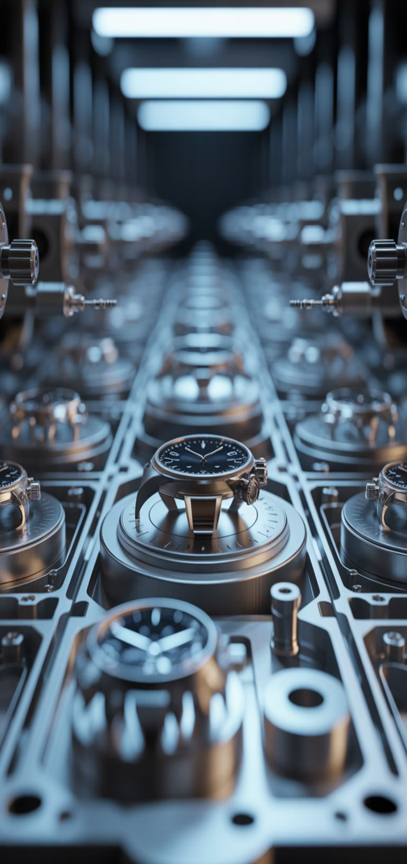
Welcome to Epson Precision (Johor) Sdn Bhd’s Watch Case Division. As a cornerstone of advanced horological manufacturing, we blend precision engineering with traditional craftsmanship to create exceptional timepiece components. This presentation offers an inside look at our state-of-the-art facility and world-class production capabilities.
Case Frame Production
Press and forging operations creating the foundation of each timepiece
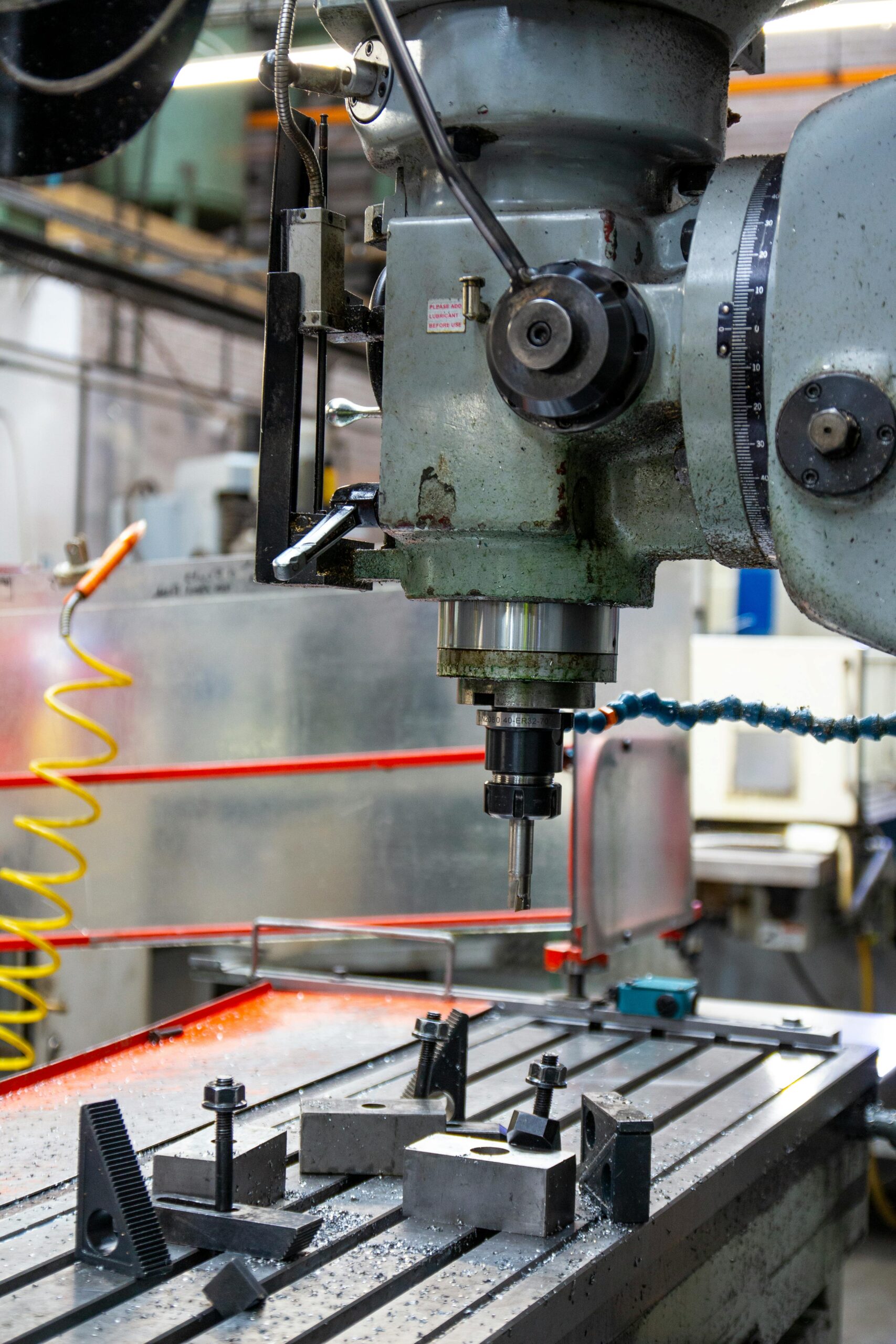
Cutting & Machining
High-precision NC operations and HSM finishing for complex geometries
Polishing Excellence
From barrel finishing to Zaratsu mirror polish and luxury patterns
Final Assembly
Skilled hand assembly including diamond kashime and waterproof testing
Technical Department
Engineering excellence and process optimization
Tool Shop Department
Precision tooling and die manufacturing
Precious Parts Production
Specialized components requiring extraordinary precision glass specialist
Press Production Introduction
Our Press Production facility employs advanced forging technologies to transform raw materials into precision watch case components. We utilize both cold and warm forging processes, each optimized for specific materials and design requirements to achieve exceptional dimensional accuracy and surface quality.
Cold Forging Process
Technical Specifications
- Forging Temperature: 25–30°C (ambient)
- Primary Material: Stainless steel (SUS316L/304)
- Products: Case frames (CF), case backs (GB), and bezels (BK)
Warm Forging Process
Technical Specifications
- Forging Temperature: 880°C (controlled heating)
- Primary Material: Titanium (Grade 2/5)
- Products: Case frames (CF), case backs (GB), and bezels (BK)backs (GB), and bezels (BK)
Specialty Features: Our cold forging process excels in creating intricate surface textures including hammer tone finishes and precision ratchet grooves—critical aesthetic and functional elements that distinguish premium watch cases.
Process Advantage: Warm forging of titanium requires significantly fewer forging stages (maximum 2 operations) compared to traditional methods, reducing production time while maintaining superior material properties and structural integrity.
Manufacturing Innovation: Our proprietary forging processes can produce complex features such as hammer tone textures and ratchet grooves directly during the forging operation, eliminating secondary machining operations and ensuring consistent quality across production runs.
Press Production Process Flow
Blanking
Precision cutting from bar material stock
Ito Buff
Surface preparation removing oxidation
Forging
Shape formation through controlled compression
Annealing
Heat treatment for optimal properties
Detailed Process Steps
1. Blanking
High-precision punch process cuts blanks from bar material. Thicker materials (>4mm) require furnace pre-heating: SUS at 1130°C, Titanium at 825°C.
2. Ito Buff
Removes surface oxidation, sharp edges, and prepares material for optimal forging. This critical step ensures clean material flow during compression.
3. Forging
Progressive forming through warm or cold forging creates final component shape with exceptional dimensional accuracy and material grain structure.
4. Annealing
Controlled heat treatment relieves internal stresses, optimizes hardness, and enhances ductility for subsequent machining operations.
Our integrated forging process delivers components with superior structural integrity, precise dimensional tolerances, and exceptional surface characteristics—the foundation of premium watch case quality.”
Cutting Production Introduction
EPJ’s cutting production department employs advanced CNC machining technologies to create watch case components with exceptional dimensional accuracy and surface quality. Our capabilities span two distinct product grades, each optimized for specific market segments while maintaining the precision standards demanded by the global watch industry.
High-Grade Components (G1)
Materials: Titanium alloy and Stainless Steel 316L
Component Types: Case frames (CF), glass bezels (GB), and case backs (BK)
Specialty Capability
High-Speed Milling (HSM) post-processing eliminates rough cutting marks, creating pristine surfaces that serve as the foundation for premium polishing operations. This advanced finishing technique is reserved for components destined for luxury timepiece applications where surface excellence is paramount
Middle-Grade Components (G2)
Materials: Titanium, Stainless Steel 316L, and Stainless Steel 304
Component Types: Case frames (CF), glass bezels (GB), and case backs (BK)
Specialty Feature — FPL Technology
Our innovative Forging-less Production Line (FPL) represents a paradigm shift in watch case manufacturing. Components transition directly from raw material to finished geometry through precision CNC machining, bypassing traditional forging operations entirely.
This breakthrough process currently accounts for 70% of our middle-grade production volume, offering significant advantages in production flexibility, lead time reduction, and cost efficiency.

Manufacturing Innovation Highlight
The transition from traditional forging-based manufacturing to direct cutting through FPL technology represents a major advancement in watch case production. By eliminating forging operations for 70% of middle-grade components, EPJ has achieved greater manufacturing agility, reduced tooling costs, and shortened production cycles while maintaining the precision and quality standards our customers demand.
Cutting Production Process Flow
The Forging-less Production Line (FPL) represents EPJ’s innovative approach to watch case manufacturing. This streamlined process eliminates traditional forging operations, instead relying on advanced CNC machining to transform raw material directly into finished components. Each stage of the FPL workflow is optimized for precision, efficiency, and surface quality.
Raw Material
FPL process begins with donut-shaped forged blanks, eliminating multiple forging operations and reducing material waste.
The FPL process begins with precisely manufactured donut-shaped blanks. This geometry optimizes material utilization while providing stable workholding for subsequent machining operations.
Material specifications are carefully controlled to ensure consistent machinability and final component properties across production batches.
NC Lathe (NCL)
First precision cutting operation machines both reverse and top faces using CNC lathe technology for dimensional accuracy
CNC turning operations machine both the reverse face and top surface of the component. These operations establish critical reference surfaces and achieve preliminary dimensional accuracy.
NC Milling (NCM)
Second cutting operation uses multi-axis CNC milling to create complex contours, grooves, and detailed geometric features
Multi-axis CNC milling creates the detailed geometry required for watch case components. Complex contours, recesses, and mounting features are precisely machined to specification.
HSM Finishing
High-grade models only: High Speed Milling removes all cutting marks, achieving mirror-quality machined surfaces that rival polished finishes
High-grade models receive additional HSM finishing to eliminate visible tool marks from previous operations. This premium surface preparation enables superior polishing results.
Polishing Production Introduction
EPJ’s polishing production department transforms precisely machined components into visually stunning works of art. Through a combination of advanced automated equipment and skilled hand-finishing techniques, our polishing operations deliver the mirror-like surfaces and distinctive decorative patterns that define luxury timepieces. Our capabilities span multiple grades, each tailored to specific market segments and aesthetic requirements.
High-Grade Polishing (G1)
Middle-Grade Polishing (G2)
Premium finishing services for Grand Seiko and other ultra-luxury timepiece brands represent the pinnacle of our polishing expertise. High-grade components undergo extensive hand-finishing using traditional Zaratsu polishing techniques combined with contemporary pattern application methods.
These processes demand exceptional skill and years of training, as artisans work to achieve the flawless mirror surfaces and crisp edges that distinguish the world’s finest watches. Every surface is scrutinized under magnification to ensure absolute perfection.
Middle-grade polishing operations balance efficiency with quality, utilizing automated equipment for consistent results across high production volumes. While the process emphasis shifts toward mechanization, skilled operators remain essential for quality control and finishing verification.
These components receive professional-grade surface treatments appropriate for mid-market timepieces, featuring smooth polished surfaces and clean aesthetic execution without the labor-intensive hand-finishing required for ultra-luxury applications.
Grand Seiko Heritage
EPJ’s high-grade polishing capabilities directly support Grand Seiko production — representing one of the most prestigious partnerships in watchmaking. The Zaratsu polishing technique, a cornerstone of Grand Seiko’s visual identity, requires extraordinary skill to execute properly. Our polishing artisans undergo years of training to master this demanding craft, ensuring every Grand Seiko component meets the brand’s legendary standards for surface excellence and aesthetic perfection.
Polishing Process Flow
Barrel Polishing
Automated tumbling process removes burrs and creates uniformly smooth surfaces, preparing parts for subsequent precision polishing operations
Components are tumbled in rotating barrels with ceramic media and polishing compounds. This mass finishing operation efficiently removes sharp edges, burrs, and surface irregularities left by machining operations.
The process creates a uniformly smooth surface texture that facilitates subsequent polishing stages, reducing the effort required for hand-finishing operations.
Buff & Grinding
Grinding: Removes forging texture and establishes base geometry
Buffing: Eliminates cutting marks while creating bright, reflective surfaces
Grinding: Removes forging surface texture and establishes the fundamental component shape with proper surface geometry.
Buffing: Progressive buffing operations with increasingly fine abrasive compounds eliminate cutting marks and create brilliant, shining surfaces ready for final finishing.
Zaratsu Polish
The signature EPJ process: Traditional flat-lap polishing creates distortion-free mirror surfaces with razor-sharp edges—a hallmark of Grand Seiko quality
The Zaratsu process represents one of the most critical operations in high-grade polishing. Using large-diameter rotating abrasive plates, skilled artisans create perfectly flat, mirror-finished surfaces with exceptional clarity.
This traditional Japanese polishing technique demands extraordinary precision and years of experience to master. The resulting distortion-free reflections distinguish luxury timepieces from ordinary watches
Pattern Finishing
Final decorative texturing including sunburst, circular grain, and hairline finishes. Pattern work transforms functional surfaces into luxury design elements
Decorative pattern application adds visual sophistication and luxury appeal to finished components. Various techniques create sunburst patterns, circular grain textures, or other distinctive surface finishes.
This final artistic touch transforms functional components into objects of beauty, contributing to the overall aesthetic impact that defines premium timepiece design.
EPJ’s polishing capabilities represent the intersection of traditional craftsmanship and modern manufacturing technology. While automated equipment handles preliminary operations efficiently, the artistic eye and skilled hands of our polishing artisans remain irreplaceable for achieving the surface perfection demanded by luxury watch brands. This blend of old and new ensures consistent quality across production volumes while preserving the human touch essential to true horological excellence.
Assembly Production Introduction
Our assembly operations unite precision components through exacting hand-assembly techniques. Every team member possesses advanced skills in traditional kashime (crimping) methods, laser marking, and diamond setting—ensuring each timepiece case meets stringent quality standards.
Middle Grade Assembly Excellence
Our assembly technicians demonstrate exceptional versatility, mastering multiple techniques from component integration to decorative finishing. Each assembly station combines traditional handcraft skills with modern quality assurance systems.
Laser Marking
Precision laser engraving for serial numbers and branding on stainless steel, titanium, and ceramic cases
Diamond Kashime
Traditional hand-crimping technique using specialized diamond-tipped tools for permanent component joining
Quality Verification
Comprehensive inspection protocols verify dimensional accuracy, surface quality, and assembly integrity. Every component undergoes rigorous examination to ensure compliance with customer specifications and internal quality standards.
Universal Craftsmanship: A defining characteristic of our assembly team is that every technician possesses comprehensive assembly skills, including the intricate kashime technique—ensuring flexibility, quality consistency, and deep understanding of the complete assembly process.
Assembly Process Flow
Our assembly process integrates traditional craftsmanship with modern precision technology through a carefully orchestrated sequence of operations. Each stage builds quality assurance into the finished product.
Pre-Process
Inking and diamond kashime preparation
Bezel/Glass
Secure fastening with multiple methods
Pipe Set
UV-bonded crown tube installation
Post-Process
Waterproof verification and marking
1. Pre-Process
2. Pipe Setting
3. Bezel & Glass
4. Post-Process
Inking Process: Precision ink application fills engraved markings on stainless steel, titanium, and ceramic components for enhanced legibility.
Crown tubes are precisely inserted into case frames and permanently bonded using UV-cured adhesive technology. This process ensures perfect alignment and waterproof integrity at this critical interface.
Bezel Setting: Kashime fastening or plastic gasket retention ensures secure attachment.
Waterproof Testing: Every case undergoes rigorous pressure testing to guarantee water resistance specifications are met or exceeded
Diamond Kashime: Master craftspeople use specialized diamond tools to create permanent mechanical fastenings with microscopic precision.
Glass Setting: Crystal installation uses specialized adhesive or compression gasket systems based on design requirements and water resistance specifications.
Laser Marking: Final identification marks are permanently laser-engraved with precision positioning and depth control.
“Assembly excellence demands both technical precision and artistic sensitivity—each completed case represents the synthesis of hundreds of hours of specialized craftsmanship across all production departments.”
Excellence in Every Detail
The Watch Case Division at Epson Precision (Johor) represents the convergence of precision engineering, traditional craftsmanship, and modern manufacturing technology. From the initial forging of raw materials to the final water resistance testing, every stage of our integrated production process reflects an unwavering commitment to quality and excellence.
35+
Years of Manufacturing Excellence
Established in 1988, delivering world-class watch cases
4
Core Production Processes
Press, Cutting, Polishing, and Assembly operations
70%
FPL Process Adoption
Revolutionary efficiency in middle-grade production
Our Commitment: Through continuous innovation, skilled craftsmanship, and unwavering attention to detail, EPJ Watch Case Division stands as a cornerstone of Seiko’s global manufacturing excellence. We don’t just make watch cases—we create the foundation upon which legendary timepieces are built.